
Best Mold Certification Courses: What You Need to Know Before You Enroll
Jun 08, 2026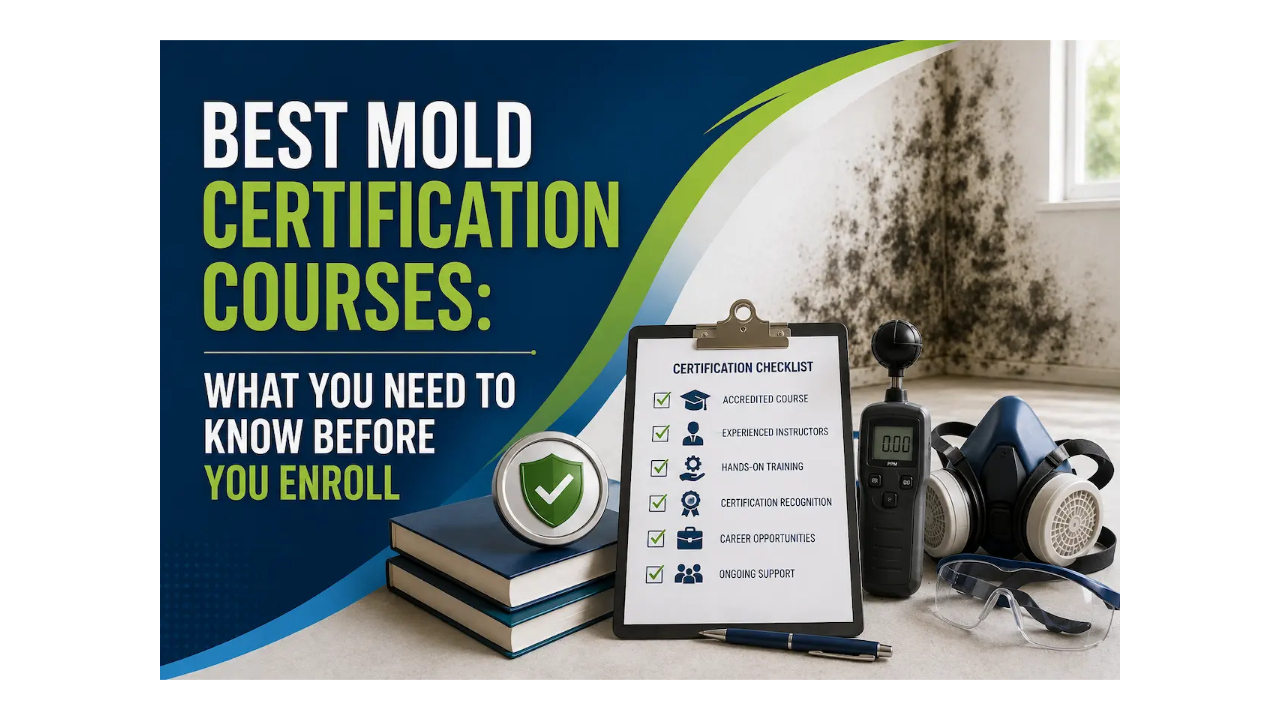
If you're serious about building a career in mold assessment or remediation, the first question you'll face is simple: which certification course is actually worth your time and money? There are plenty of options out there, but not all of them prepare you for real-world work or for passing the state exam that actually gets you licensed.
This guide breaks down the best mold certification courses available today, what to look for when comparing them, and why the course you choose can make or break your career in indoor air quality.
Why Mold Certification Matters More Than Ever
Mold is not a DIY industry at least not anymore. Florida and several other states now legally require anyone performing mold assessment or remediation commercially to hold a state-issued license. That means taking an approved course, passing a proctored exam, and meeting education or experience requirements set by the state's Department of Business and Professional Regulation (DBPR).
Beyond legal compliance, the right certification signals to clients, employers, and insurance companies that you know what you're doing. In an industry where cutting corners can harm people's health and expose you to serious liability, credentials matter.
The demand isn't slowing down either. Florida's humidity, aging housing stock, and near-constant weather events keep mold work in steady supply year-round. Getting certified now means positioning yourself in a market that isn't going anywhere.
What Makes a Good Mold Certification Course?
Before listing specific courses, it helps to understand what separates a solid program from a glorified exam prep session. The best courses tend to share a few common traits:
- They go beyond memorizing exam answers and actually teach you building science, moisture dynamics, and field strategy
- Instructors bring real industry experience not just classroom theory
- The curriculum covers both mold assessment and remediation, not just one side
- They include exam prep and either offer or proctor the state exam directly
- They provide course materials you can reference after certification, not just during the class
- They meet state-specific requirements (critical if you're in Florida, New York, Louisiana, or DC)
A two-day crash course that rushes you through slides before handing you an exam isn't education — it's a checkbox. The best programs treat this as the professional foundation it is.
Top Mold Certification Courses Worth Considering
1. NIAQI — National Indoor Air Quality Institute (Florida)
NIAQI is one of the most respected names in Florida-specific mold certification. Their 3-day in-person course is Florida DBPR-accredited and prepares students for both the MRSA (Mold Assessor) and MRSR (Mold Remediator) state exams. The instructors bring over 50 years of combined field experience, and unlike many providers, NIAQI offers the state exam directly on Day 3 of the course.
What sets NIAQI apart is the depth of the curriculum. Their Florida mold license course covers:
- Introduction to the IAQ industry and professional standards
- Building science and forensics
- Moisture intrusion and drying strategies
- Microbial science and sampling methodology
- Chemicals, toxicity, and respiratory protection
- HVAC systems and their role in mold problems
- Remediation and prevention protocols
They also offer a virtual option via Zoom and a self-paced online format for students who can't attend in person. The course includes a 3-month NIAQI membership and a physical course booklet. NIAQI claims a 100% pass rate on the state exam, which is backed up by their student reviews.
For anyone looking specifically to earn their mold assessor license in Florida or their mold remediation license, NIAQI is the most complete option in the state.
2. NORMI — National Organization of Remediators and Microbial Inspectors
NORMI has been certifying mold professionals since 2004 and has trained students across the US, Canada, Europe, and South America. Their courses meet licensing requirements for Florida, DC, Louisiana, and all non-licensing states. They offer both a Certified Mold Assessor and Certified Mold Remediator pathway, along with advanced combined certifications like the NCMP/NCRSI for experienced professionals who want to go deeper.
NORMI courses can be taken online and are available through authorized training schools, which gives them wide geographic reach. Good choice if you're not based in Florida but want a nationally recognized credential.
3. MICRO — Mold Inspection Consulting and Remediation Organization
MICRO offers the CMI (Certified Mold Inspector) credential and has built a reputation for thorough online training. Their 30-hour online course for CMI certification is one of the more comprehensive self-paced options available. They also provide a directory listing and industry membership benefits, which can be useful for marketing yourself after certification.
Key features of MICRO:
- Fully online format with 24/7 access
- Includes access to equipment resources and environmental liability insurance programs
- Strong focus on inspection over remediation (not ideal if you want both)
- Membership-based perks like logo usage and directory listing
4. ACAC — American Council for Accredited Certification
ACAC (formerly AIAQC) is a nationally recognized accrediting body rather than a course provider directly, but many top training organizations align their programs with ACAC standards. The EPA's own online mold training course has been approved by ACAC for recertification credits. If you're already certified and looking for CEUs, ACAC-aligned courses are widely accepted.
5. IICRC — Institute of Inspection, Cleaning and Restoration Certification
The IICRC is the gold standard for water damage and restoration professionals, and their Applied Microbial Remediation Technician (AMRT) course is highly respected in the mold remediation field. It's particularly valuable for restoration contractors who work in water damage and want to add mold remediation to their service offerings. IICRC courses are widely available through affiliated schools across the country.
In-Person vs. Online Mold Certification: Which One Is Right for You?
Both formats can get you certified, but they're not identical experiences. Here's how they compare:
- In-person courses give you hands-on demonstrations, real-time Q&A, and direct interaction with experienced instructors. You also benefit from networking with fellow students who are entering the same industry. Most in-person programs let you take the state exam on the final day, so you walk away fully ready to apply for licensure.
- Online courses offer flexibility and lower barrier to entry, especially for working professionals. Self-paced formats let you study on your schedule. However, for state-licensed exams in Florida, the exam itself still needs to be proctored — meaning you'll eventually need to sit for it either in person or via a monitored video session.
If you're pursuing a Florida DBPR license specifically, an in-person course is almost always the better investment. The exam is difficult enough that spending three days learning from professionals who've done this work for decades is far more valuable than watching pre-recorded videos alone.
Florida-Specific Requirements You Should Know
If you're looking to get licensed in Florida, the state has specific prerequisites beyond just completing a course. Before enrolling, make sure you understand what qualifies you to sit for the exam:
- Must be at least 18 years old
- Associate's degree or higher in a related science field — OR 4 years of documented field experience (15 projects per year)
- Demonstrated training in water/moisture intrusion, mold, and respiratory protection
- Passed a state-approved proctored exam
- Background check through Florida DBPR
- Mold Remediator applicants must also carry at least $1 million in general liability insurance
You can review the full Florida mold license requirements directly on the NIAQI site, where they've published the complete DBPR administrative code for reference.
Final Thoughts
There's no shortage of mold certification options, but the best course is one that takes the profession seriously. It should prepare you to protect people's health, limit your legal exposure, and build a sustainable business not just hand you a certificate after 48 hours.
For Florida professionals, NIAQI's state-approved 3-day program covers all of this and includes the exam. For those outside Florida or looking for nationally portable credentials, NORMI, MICRO, and IICRC all offer strong alternatives depending on your specific path.
Do your research, compare curricula not just price and invest in a course that will still be useful to you five years into your career.
Get mold industry news and updates from NIAQI.
Join our mailing list to receive the latest news and updates from our expert mold instructors.
Don't worry, your information will not be shared.
We hate SPAM. We will never sell your information, for any reason.

