
Florida Mold License: Should You Become a Mold Assessor, Mold Remediator, or Both?
May 31, 2026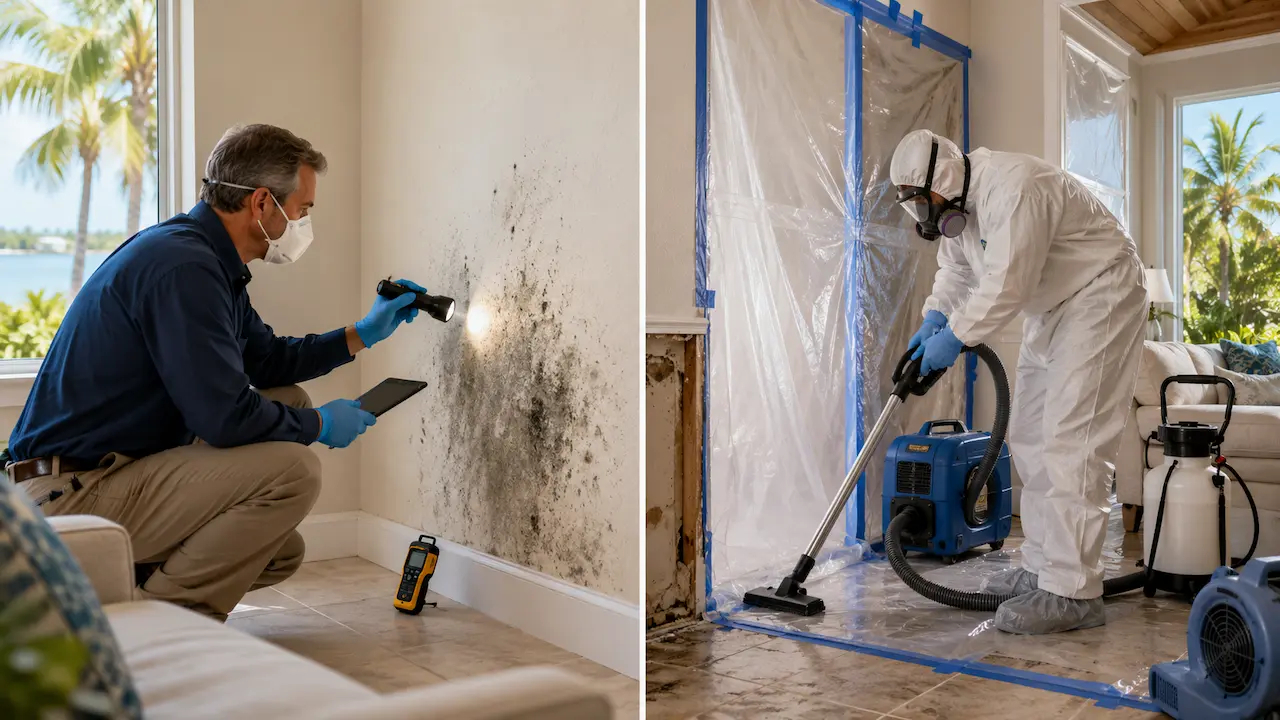
When you’re planning to enter Florida’s mold industry, one of the most important decisions you’ll make isn’t just which course to take. It’s which license path makes the most sense for your career.
Should you become a Mold Assessor, a Mold Remediator, or pursue both licenses?
This decision affects the type of work you can legally perform, the clients you can serve, the services you can offer, and the long-term direction of your business. At NIAQI, we help students understand the difference between assessment and remediation so they can choose the right path before investing time, money, and energy into licensing.
Here’s what you need to know before deciding.
Why This Decision Matters More Than Most Students Realize
Mold-related services in Florida are regulated, and the license you choose determines what role you can legally perform in the field.
A mold career may involve:
- Inspecting properties for moisture and mold concerns
- Collecting samples and preparing reports
- Creating remediation protocols
- Removing contaminated materials
- Cleaning and correcting mold-affected areas
- Helping homeowners, property managers, contractors, and real estate professionals solve indoor air quality issues
But not every license allows you to do every task.
A Mold Assessor and a Mold Remediator serve different purposes. Choosing the wrong path can limit your services, confuse your clients, or create compliance issues. Choosing the right path can help you build a stronger, more flexible career in the mold industry.
Option 1: Becoming a Florida Mold Assessor
A Mold Assessor focuses on inspection, evaluation, documentation, and reporting. This is the professional who investigates whether mold or moisture problems may exist and helps determine what should happen next.
When this path makes sense:
- You want to inspect homes or commercial buildings
- You are interested in indoor air quality, moisture intrusion, and building science
- You want to collect samples and provide written findings
- You prefer evaluation and consulting over physical removal work
- You want to work with homeowners, real estate agents, property managers, or restoration companies
What to watch for:
Mold assessment is not just “looking for mold.” It requires understanding moisture sources, building conditions, HVAC impact, sampling methods, safety procedures, reporting, and professional standards.
Clients rely on assessors to provide clear, objective guidance. That means your training needs to prepare you for real-world situations, not just exam questions.
A Mold Assessor license can be a strong path for people who want to build a consulting-based service, expand an inspection business, or add indoor air quality expertise to an existing construction, restoration, or environmental background.
Option 2: Becoming a Florida Mold Remediator
A Mold Remediator focuses on removing, cleaning, correcting, and restoring areas affected by mold. This is the professional who performs the physical remediation work after a mold issue has been identified.
When this path makes sense:
- You want to perform mold cleanup and removal work
- You already work in restoration, water damage, construction, HVAC, or property repair
- You want to manage remediation projects
- You are comfortable with containment, safety protocols, equipment, and field work
- You want to offer hands-on services to homeowners, businesses, and property managers
What to watch for:
Mold remediation is highly practical and process-driven. It requires more than removing visible mold. A remediator must understand containment, moisture control, PPE, cleaning methods, disposal, documentation, and how to prevent cross-contamination.
Poor remediation work can create bigger problems for the property owner and increase liability for the contractor. That is why proper training matters.
A Mold Remediator license can be a strong choice for contractors, restoration professionals, and entrepreneurs who want to offer mold cleanup services as part of a broader property restoration business.
Option 3: Pursuing Both Mold Assessor and Mold Remediator Licensing
Some professionals choose to pursue both the Mold Assessor and Mold Remediator paths. This can create more flexibility and a deeper understanding of the full mold services process.
Why students consider both:
- Broader career opportunities
- Stronger technical understanding
- Ability to understand both inspection and remediation workflows
- Better communication with clients, contractors, and property owners
- More flexibility when building or expanding a mold-related business
What to watch for:
Even if you pursue both licenses, you must understand the professional boundaries between assessment and remediation. In many situations, the assessor and remediator roles must remain clearly separated to protect objectivity and compliance.
That means having both licenses does not mean every job should be handled the same way. You still need to understand when to inspect, when to remediate, and how to structure your services properly.
For many serious professionals, learning both sides of the industry creates a stronger foundation. It helps you understand what happens before, during, and after a mold project.
How Training Changes Based on Your Goal
Your license path should guide how you approach training.
If you want to become a Mold Assessor, your training should help you understand inspection methods, moisture investigation, sampling, reporting, standards of practice, and how to prepare for the Florida mold assessor exam.
If you want to become a Mold Remediator, your training should focus on containment, removal procedures, safety, equipment, remediation strategies, standards of practice, and how to prepare for the Florida mold remediator exam.
If you want both, you need a course that gives you a complete view of indoor air quality, mold assessment, mold remediation, building science, safety, and real-world field application.
NIAQI’s mold training is designed to help students build practical knowledge while preparing for licensing success. Students learn from experienced professionals who understand the challenges of real mold projects, not just classroom theory.
Career Considerations Before You Choose
Before selecting your license path, ask yourself what kind of work you actually want to do.
If you prefer analysis and reporting:
The Mold Assessor path may be the better fit. This role is often more inspection-focused and documentation-heavy.
If you prefer hands-on project work:
The Mold Remediator path may be the better fit. This role is more field-based and involves active cleanup, containment, and correction.
If you want to build a full-service career:
Learning both sides may give you the strongest long-term advantage, especially if you plan to grow a business, work with contractors, or manage complex projects.
Questions Students Should Ask Before Deciding
If you are considering a Florida mold license, these questions can help you choose the right path:
- Do I want to inspect mold issues or remove mold contamination?
- Am I more interested in consulting and reporting or hands-on remediation work?
- Do I already have experience in construction, restoration, inspection, HVAC, or water damage?
- Do I want to start a new business or add mold services to an existing business?
- Do I understand the difference between assessment and remediation responsibilities?
- Am I prepared to meet Florida’s licensing, examination, and application requirements?
- Would learning both sides of the industry make me more competitive?
The answers will often make your next step much clearer.
How NIAQI Helps Students Choose the Right Path
At NIAQI, we work with students who want more than a basic overview. Our goal is to help future mold professionals understand the industry, prepare for licensing, and build confidence before entering the field.
Our training support includes:
Mold Assessor preparation
We help students understand the inspection side of mold services, including moisture investigation, sampling concepts, reporting, safety, and assessment standards.
Mold Remediator preparation
We help students understand remediation methods, containment, cleaning procedures, safety practices, equipment use, and field application.
Real-world instruction
Our courses are taught by experienced professionals who bring practical industry knowledge into the classroom.
Exam-focused learning
Students receive training designed to help them prepare for the Florida mold assessor or mold remediator exam.
Career direction
We help students understand which license path fits their goals so they can move forward with more confidence.
Whether you are starting a new career, expanding an existing business, or adding mold services to your professional skillset, the right training can make the process clearer and more manageable.
Ready to Move Forward?
If you are ready to begin your Florida mold licensing journey, NIAQI can help you choose the right course and prepare for your next step.
Whether your goal is to become a Mold Assessor, a Mold Remediator, or both, our training is designed to help you build the knowledge and confidence needed to enter the mold industry professionally.
Contact NIAQI today to learn more about upcoming mold licensing courses, virtual training options, and exam preparation.
FAQs
Q1. What is the difference between a Mold Assessor and a Mold Remediator?
A Mold Assessor evaluates and documents mold or moisture concerns. A Mold Remediator performs the cleanup, removal, containment, and correction work. Both roles are important, but they serve different purposes in a mold project.
Q2. Do I need a license to perform mold services in Florida?
Yes. Florida regulates mold-related services. Individuals who want to perform mold assessment or mold remediation for compensation must meet the applicable licensing requirements.
Q3. Which license should I choose first?
It depends on your career goals. If you want to inspect, sample, and report, the Mold Assessor path may be best. If you want to perform cleanup and restoration work, the Mold Remediator path may be better. If you want broader knowledge, you may consider both.
Q4. Can I take training online or virtually?
NIAQI offers flexible training options, including virtual and online learning options depending on the course format available. Students should confirm the current schedule and registration details before enrolling.
Q5. Does the course include exam preparation?
Yes. NIAQI’s mold training is designed to help students understand the subject matter and prepare for licensing exams related to mold assessment or mold remediation.
Q6. Is mold training useful if I already work in construction or restoration?
Yes. Many students come from construction, restoration, water damage, HVAC, inspection, or property services. Mold training can help expand your knowledge and allow you to pursue a regulated mold-related license in Florida.
Q7. Should I become both a Mold Assessor and a Mold Remediator?
For some professionals, pursuing both can create stronger industry knowledge and more flexibility. However, you still need to understand professional boundaries, compliance responsibilities, and when each role applies.
Get mold industry news and updates from NIAQI.
Join our mailing list to receive the latest news and updates from our expert mold instructors.
Don't worry, your information will not be shared.
We hate SPAM. We will never sell your information, for any reason.

