
How to Detect Mold in Your Home? Signs, Methods, and Early Warning Clues
Apr 23, 2026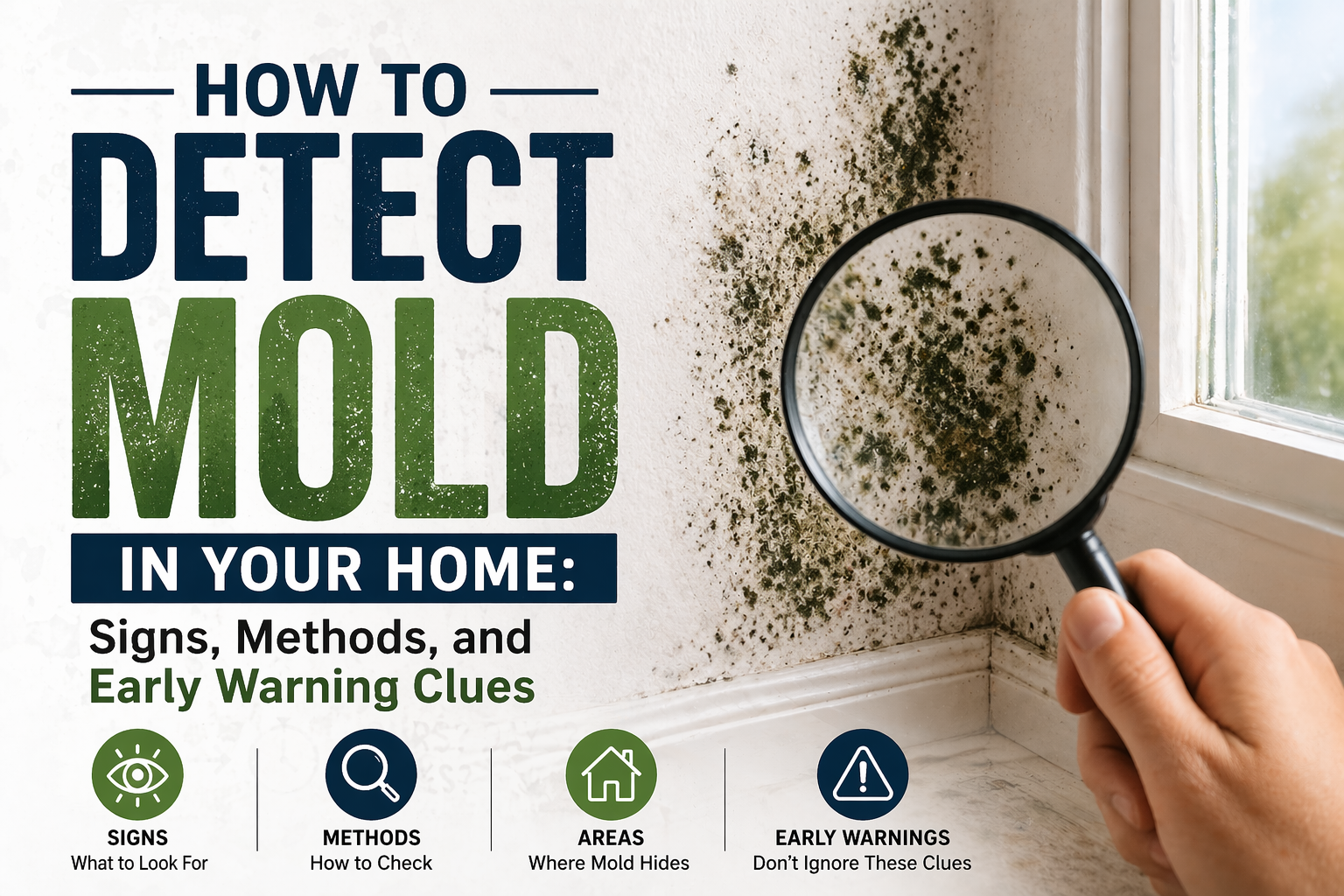
Mold in a home often starts quietly and spreads before most people even notice it. Many homeowners search for “how to check for mold in house” or “early signs of mold in home” because it can hide behind walls, under floors, and in damp corners. Detecting mold early helps you avoid health issues, property damage, and costly repairs.
To find mold in your home, you need to understand what signs to look for, where it grows, and how it behaves in hidden spaces.
What Mold Looks and Smells Like in a House
Mold does not always appear as large black patches. In many cases, it starts as small spots or light discoloration on walls, ceilings, or surfaces. It can be black, green, white, gray, or even orange depending on the type and the surface it grows on.
One of the strongest signs of mold is its smell. People often describe it as musty, damp, or earthy. Even if you cannot see mold, a persistent musty odor in a room is often a warning sign that mold is growing nearby or hidden inside materials.
If a space smells “old and damp” even after cleaning, it may indicate hidden mold behind walls or under flooring.
Visual Signs of Mold Growth Indoors
One of the simplest ways to detect mold is by carefully looking at surfaces in your home. Mold often appears in areas where moisture is present or where water damage has occurred.
You may notice stains on walls or ceilings that spread slowly over time. Paint may start bubbling, cracking, or peeling due to moisture underneath. In bathrooms, mold often appears around tiles, grout lines, and ceilings where steam collects.
In some cases, mold looks like fuzzy patches or spots that grow larger over time. Any unexplained discoloration that continues to spread is worth investigating.
Hidden Areas Where Mold Commonly Grows
Mold often grows in places you cannot easily see. This makes detection more difficult without careful inspection.
It is commonly found behind drywall where there has been a leak, under sinks where pipes may drip, and inside cabinets near plumbing. Basements and crawl spaces are also high-risk areas because they tend to stay damp and poorly ventilated.
Air conditioning units and HVAC ducts can also hide mold because they collect moisture and dust, which create ideal conditions for growth.
If one room feels more humid or smells different than others, it may indicate hidden mold in that area.
Health Symptoms That May Signal Mold Presence
Sometimes mold is first noticed through health symptoms rather than visible signs. Mold spores can affect people differently, but common reactions include sneezing, coughing, nasal congestion, itchy eyes, and headaches.
People with allergies or asthma may notice their symptoms getting worse indoors and improving when they leave the house. This pattern often suggests poor indoor air quality caused by mold or excess moisture.
If symptoms persist without a clear reason, it may be worth checking for hidden mold in the home.
Get mold industry news and updates from NIAQI.
Join our mailing list to receive the latest news and updates from our expert mold instructors.
Don't worry, your information will not be shared.
We hate SPAM. We will never sell your information, for any reason.

