
How to Perform a Professional Mold Inspection Step-by-Step
Apr 22, 2026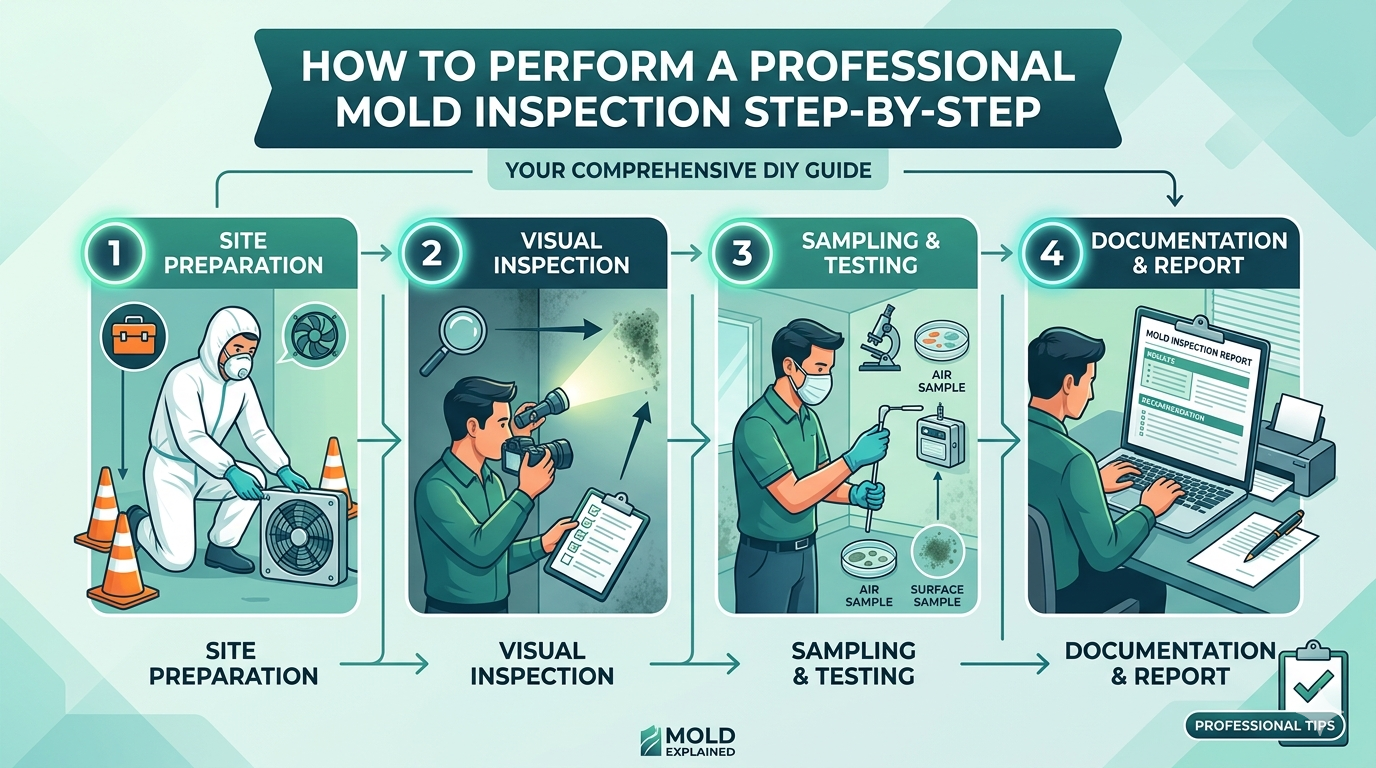
A professional mold inspection is a structured process used to detect mold growth, identify moisture sources, and assess indoor air quality. It is an essential skill for mold assessors, home inspectors, and remediation professionals, especially in humid regions like Florida where mold growth is common.
In this guide, you will learn how to perform a complete mold inspection using industry standard practices. This process is used in residential homes, commercial buildings, and rental properties where hidden mold and moisture problems are suspected.
This article is designed for beginners, trainees, and professionals who want to improve their mold inspection skills and understand real world field procedures.
Understanding the Purpose of a Mold Inspection
A mold inspection is more than just looking for visible mold. It is a systematic evaluation of moisture conditions, building materials, ventilation systems, and indoor air quality.
The main goal is to find the source of moisture that allows mold to grow. Without controlling moisture, mold will continue to return even after cleaning.
Professional inspectors focus on identifying hidden mold, preventing structural damage, and protecting indoor health. In Florida, high humidity levels make this process even more important because mold can grow quickly behind walls, under flooring, and inside HVAC systems.
Common search intent keywords related to this topic include mold detection process, mold assessment procedure, indoor mold inspection, and professional mold evaluation.
Preparing for a Professional Mold Inspection
Before starting the inspection, professionals gather information about the property. This includes asking about water leaks, previous mold problems, odors, or health complaints.
Inspectors also prepare their tools and ensure safety measures are in place. Proper preparation improves accuracy and reduces risk during the inspection.
A typical inspection requires protective gear, moisture detection tools, and air sampling equipment. The inspector also plans the inspection route to ensure all rooms, attic spaces, crawl spaces, and HVAC areas are checked thoroughly.
Preparation is a critical step because missing early signs of moisture can lead to incomplete results and inaccurate reporting.
Conducting a Visual Mold Inspection
The first field step is a detailed visual inspection of the property. This involves carefully examining walls, ceilings, floors, and hidden areas for signs of water damage or mold growth.
Professional inspectors look for discoloration, staining, peeling paint, warped surfaces, and musty odors. These are common indicators of hidden mold activity.
Special attention is given to bathrooms, kitchens, basements, and areas near plumbing lines. In Florida homes, inspectors also check air conditioning units because condensation often leads to mold growth inside ducts and drip pans.
During this stage, the inspector documents all findings with photos and notes. This helps build a clear record of visible contamination and moisture damage.
Identifying Moisture Sources and Humidity Problems
Moisture is the main cause of mold growth. Without moisture, mold cannot survive or spread. That is why professional inspectors focus heavily on identifying moisture sources.
A moisture meter is used to detect hidden dampness inside walls, ceilings, and floors. High moisture readings often indicate leaks, condensation, or poor ventilation.
Inspectors also check humidity levels in the air using a hygrometer. In Florida, indoor humidity above recommended levels can create ideal conditions for mold growth even if no visible leaks are present.
Common moisture problems include roof leaks, plumbing leaks, poor drainage, and HVAC condensation issues. Finding and documenting these sources is essential for a complete mold inspection report.
Inspecting Hidden and Hard to Reach Areas
Mold often grows in hidden spaces where airflow is limited. Professional inspectors carefully check these areas using specialized tools and techniques.
Attics are inspected for roof leaks and insulation moisture. Crawl spaces are checked for ground moisture and poor vapor barriers. Behind walls, inspectors may use infrared cameras to detect temperature differences that suggest water intrusion.
HVAC systems are also examined because mold spores can spread through air ducts and affect the entire building.
This stage is critical because most serious mold problems are not visible during a basic walkthrough. Hidden mold is often the main cause of long term indoor air quality issues.
Performing Air and Surface Sampling
In many cases, a professional mold inspection includes air and surface sampling. This helps determine the type and concentration of mold spores present indoors.
Air sampling measures airborne mold spores and compares them with outdoor levels. Surface sampling collects samples from visible growth areas for laboratory analysis.
These tests help confirm whether mold contamination is active and whether it poses a health risk.
Inspectors follow strict protocols when collecting samples to avoid contamination and ensure accurate results. The samples are then sent to a laboratory for detailed analysis.
This step is especially important in legal inspections, real estate transactions, and health related investigations.
Analyzing Results and Identifying Mold Types
After collecting visual data and laboratory results, the inspector analyzes all findings. The goal is to understand the severity of the mold problem and its source.
Different mold types may indicate different moisture conditions. For example, some molds grow in high humidity environments while others indicate long term water damage.
The analysis also helps determine whether remediation is required and how urgent the situation is.
A professional inspector does not only identify mold presence but also explains the root cause and potential risks associated with continued exposure.
Writing a Professional Mold Inspection Report
A mold inspection report is the final step in the process. This document summarizes all findings, including visual evidence, moisture readings, air test results, and recommendations.
A clear and detailed report helps property owners, contractors, and remediation specialists understand the extent of the issue.
The report also includes guidance on moisture control and prevention strategies. This is important because mold problems will return if the underlying moisture issue is not fixed.
Professional reports must be easy to understand, accurate, and based on scientific data.
Importance of Professional Mold Inspection Training
Learning how to perform a mold inspection requires proper training and field experience. Many professionals in Florida take certification courses to understand building science, moisture control, and inspection standards.
Training helps inspectors develop skills in identifying hidden mold, using diagnostic tools, and preparing accurate reports.
With increasing demand for indoor air quality services, mold inspection has become a valuable career path in Florida and other humid regions.
Conclusion
A professional mold inspection is a step by step process that requires observation, measurement, testing, and analysis. It goes beyond visual mold detection and focuses on identifying moisture sources and indoor air quality risks.
By following a structured inspection method, professionals can accurately assess mold problems and provide reliable solutions. This is especially important in Florida where humidity creates constant mold growth risks.
Whether you are a beginner or an experienced inspector, mastering these steps will improve your accuracy and help you deliver better results in real world inspections.
Get mold industry news and updates from NIAQI.
Join our mailing list to receive the latest news and updates from our expert mold instructors.
Don't worry, your information will not be shared.
We hate SPAM. We will never sell your information, for any reason.

