
Black Mold vs. White Mold: How to Tell Them Apart and What Each Means for Your Home
Jul 13, 2026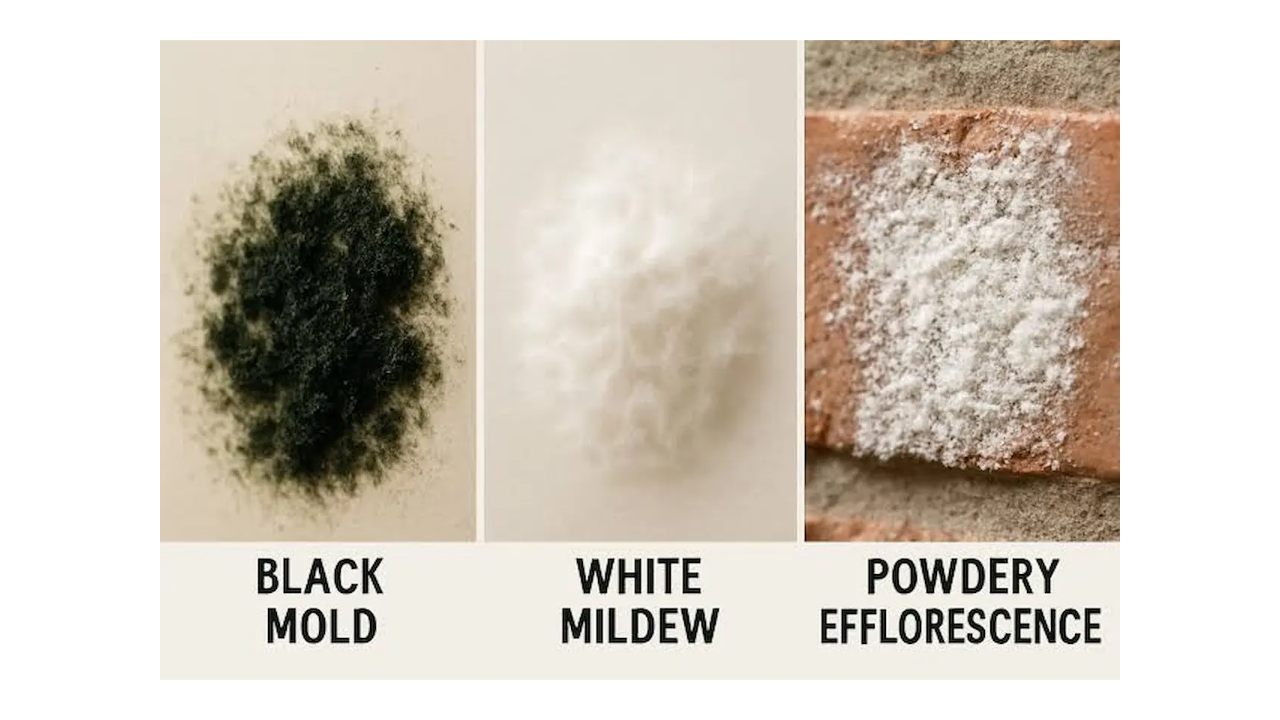
We get this question constantly from homeowners and students alike: is my mold black or white, and does it matter? It does, and the answer changes how you approach cleanup.
Both types carry health risks, but they behave differently, grow in different conditions, and often signal different problems inside a building. Here's how to tell them apart.
What Black Mold Looks Like
Black mold typically appears as dark green to black patches with a slimy or slightly fuzzy texture, most often clustering in spots that stay damp for long stretches — attics, basements, and areas around old water leaks. We've walked through hundreds of properties where homeowners assumed a dark stain was dirt or soot, only to find active mold growth once we got closer.
The smell is often the first clue before the visual one. Black mold tends to carry an earthy, musty odor similar to rotting vegetation. If you want a closer look at the specific traits that separate it from other dark-colored growth, our guide on what black mold actually looks like breaks down the visual and smell indicators in more detail.
What White Mold Looks Like
White mold shows up as a powdery, cotton-like, or fuzzy growth, usually appearing white or pale gray. It's easy to miss in dim spaces because it can blend into wood, drywall, or insulation. We've seen it mistaken for efflorescence (mineral deposits on concrete) more times than we can count — the two look similar at a glance but require completely different responses.
Unlike black mold, white mold doesn't always carry a strong odor right away, which is part of why it goes undetected longer. For a full breakdown of where it tends to form and how to confirm what you're looking at, see our article on identifying white mold in your home.
Black Mold vs. White Mold: Key Differences
Here's how the two compare at a glance:
- Color and texture: Black mold is dark and slightly slimy or fuzzy; white mold is pale and powdery or cotton-like.
- Odor: Black mold usually has a noticeable musty smell; white mold often has little to no smell in early stages.
- Common locations: Black mold favors basements, attics, and areas with sustained water damage; white mold prefers humid, poorly ventilated spaces like crawl spaces and bathrooms.
- Detection difficulty: White mold is harder to spot early because it blends into surfaces and produces less odor.
- Health risk: Both are treated as hazardous. Color alone doesn't determine toxicity — species does, and that requires testing, not a visual guess.
We always advise clients not to rely on color as a safety indicator. A pale, easy-to-miss patch of white mold can be just as disruptive to indoor air quality as a dark, obvious black mold colony.
Health Risks of Both Mold Types
Both black and white mold can trigger respiratory irritation, allergic reactions, headaches, and skin irritation, especially in people with existing sensitivities or asthma. Neither type should be treated as harmless just because it isn't the species most commonly discussed in the media.
If you're noticing physical symptoms and suspect mold exposure, our article on warning signs of mold toxicity walks through the symptoms worth paying attention to before they escalate.
Where Each Type Tends to Grow
Black mold gravitates toward areas with a history of water intrusion — think flooring near a past leak, drywall behind a washing machine, or wood framing in a basement that's seen water damage. White mold prefers ongoing humidity rather than a single water event, which is why it shows up so often in attics with poor ventilation or crawl spaces that never fully dry out.
Knowing the growth pattern helps narrow down the cause before remediation even starts. A single water stain points to one type of investigation; chronic humidity points to another.
How to Confirm What You're Actually Dealing With
Visual identification gets you part of the way, but it isn't a diagnosis. We prioritize a strategy that starts with proper testing rather than assumptions, because two mold types can look nearly identical in low light or on textured surfaces.
If you're trying to determine what's growing in your space before deciding on next steps, our guide on how to detect mold in your home covers the testing methods that give you a real answer instead of a guess.
DIY Removal vs. Calling a Licensed Professional
Small, isolated patches of either mold type on non-porous surfaces can sometimes be handled with the right cleaning approach and protective gear. Our breakdown of effective mold removal products covers what actually works for surface-level cleanup.
That said, mold behind walls, inside HVAC systems, or covering a significant area is a different situation entirely. At that point, the job calls for licensed mold remediation, not a spray bottle and a weekend. We've seen DIY attempts spread spores further into a home simply because containment wasn't handled correctly.
When It's Time to Call a Licensed Mold Professional
If you're dealing with a large affected area, recurring mold after cleanup, or health symptoms tied to your indoor air, it's time to bring in someone licensed for the job. Florida requires mold assessment and remediation work above a certain scope to be handled by a licensed mold assessor or a professional holding a mold remediation license.
We've seen firsthand how much of a difference proper licensing makes — not just for compliance, but for making sure the root cause gets fixed instead of just the surface symptom.
Why Choose NIAQI
We built our training programs around the real-world identification and remediation work professionals face on the job, not just what's required to pass an exam.
- Instructors with over 50 years of combined field experience in indoor air quality
- Hands-on training that covers both assessment and remediation, not just theory
- State-approved courses that lead directly to Florida licensing
- Curriculum built from real cases, not generic textbook scenarios
- Ongoing resources for professionals building a mold remediation business
Conclusion
Black mold and white mold look, smell, and grow differently, but neither should be dismissed based on color alone. The safest path is proper identification followed by the right level of response, whether that's a simple cleanup or a licensed remediation job. If you're ready to build the skills to make that call professionally, explore our mold certification courses.
FAQ
Is black mold more dangerous than white mold?
Not necessarily. Toxicity depends on the mold species, not the color, so both should be treated as a health concern until tested.
Can black mold turn white or white mold turn black?
Mold color can shift slightly with age, lighting, or the surface it's growing on, which is part of why visual identification alone isn't reliable.
How do I know if I have black mold or white mold?
Look at color, texture, and smell first, then confirm with proper testing rather than relying on appearance alone.
Can I remove either type of mold myself?
Small, surface-level patches on non-porous materials sometimes can be handled with the right products and protective gear. Larger or hidden growth needs a licensed professional.
Do I need a license to do mold remediation work in Florida?
Yes, mold assessment and remediation work in Florida requires state licensing above a certain project scope.
Get mold industry news and updates from NIAQI.
Join our mailing list to receive the latest news and updates from our expert mold instructors.
Don't worry, your information will not be shared.
We hate SPAM. We will never sell your information, for any reason.

